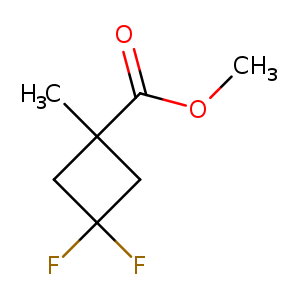
Methyl 3,3-difluoro-1-methylcyclobutanecarboxylate is a versatile compound that finds wide application in chemical synthesis, particularly in the pharmaceutical industry. Its unique chemical structure imparts valuable properties that make it a highly sought-after building block in organic synthesis processes.In organic chemistry, Methyl 3,3-difluoro-1-methylcyclobutanecarboxylate serves as a key intermediate for the synthesis of various bioactive compounds and pharmaceutical drugs. Its fluoro-substituted cyclobutane moiety confers increased stability and reactivity, making it an ideal candidate for forming complex molecular structures efficiently. Additionally, the methyl and ester groups present in the molecule offer diverse functionalization possibilities, enabling the synthesis of a wide range of target compounds with tailored properties.Furthermore, the presence of fluorine atoms in the molecule enhances its pharmacokinetic properties, such as metabolic stability and membrane permeability, which are crucial for drug development. By incorporating Methyl 3,3-difluoro-1-methylcyclobutanecarboxylate into synthetic pathways, chemists can access novel chemical space and create structurally diverse molecules with potential therapeutic benefits.Overall, the strategic use of Methyl 3,3-difluoro-1-methylcyclobutanecarboxylate in chemical synthesis enables the efficient construction of complex molecules with enhanced bioactivity and pharmaceutical relevance, making it a valuable tool for drug discovery and development efforts.







![O=C(C=Cc1ccccc1)C=Cc1ccccc1.O=C(C=Cc1ccccc1)C=Cc1ccccc1.O=C(C=Cc1ccccc1)C=Cc1ccccc1.[Pd].[Pd]](https://img.angenechemical.com/storage/3a59/3a5932eec850ab245f6f4d4a7f9497f9.png)
(Cl)Cl)c1c(C)cc(cc1C)C](https://img.angenechemical.com/storage/6693/66939a3f08a27d2b6717c3194e00970b.png)